Most drivers vacuum their car the same way they vacuum their living room: run it over the surface, and call it done. And for hardwood floors, that works. But car interiors are a different animal. You’ve got carpet fibers that trap sand and dirt like a sponge, tight gaps that a vacuum nozzle can’t reach, and floor mats that hold more grit than what might seem possible. A quick pass with the vacuum often won’t do the trick.
The good news is that vacuuming your car properly doesn’t take much longer than doing it poorly. Rather, it just takes the right technique and tools. Here’s how to actually clean your car’s interior for a professional finish at a small fraction of the cost.
Why Your Vacuum Alone Isn’t Enough for Cars
Sand, fine grit, and dirt that’s worked its way deep into car carpet fibers get locked in place, and the vacuum alone can’t dislodge them. The vacuum passes right over it, the particles stay put, and your carpet looks cleaner than it actually is.
This is the dirty secret of most home car vacuuming jobs. The surface looks okay, but a few inches down in the pile, you’ve still got a layer of abrasive grit grinding against your carpet fibers every time someone shifts their feet. Over time, that wears your carpet down from the inside out.
The solution is a two-step process that professional detailers use: dislodge first, then vacuum. And the best way to dislodge deeply embedded particles is with compressed air.
The Air Gun and Vacuum Technique for Car Vacuuming
This is the technique that separates a truly clean car interior from one that just looks clean. It requires two tools: a compressed air gun and a powerful vacuum, both of which are available free at every GO Car Wash location.
Here’s how it works:
Step 1: Start with the air gun before you touch the vacuum.
Direct short, controlled bursts of compressed air into the carpet, working in sections. Focus especially on the areas that collect the most debris: driver’s side floor, passenger footwell, and the carpet beneath and behind the front seats. The compressed air blasts into the carpet pile, forcing sand, grit, and fine particles up out of the fibers and onto the surface where suction can actually grab them.
Step 2: Work the air gun into crevices and gaps.
This is where compressed air really earns its place in the process. Blast air into the gap between the seat base and center console, along the door sill channels, under the seats, and into the seat track rails. You’ll be amazed (and maybe a little horrified) at what comes out. Crumbs, sand, pet hair, and debris that no vacuum attachment was ever going to reach on its own.
Step 3: Immediately follow with the vacuum.
Once the air gun lifts the particles out of the fibers and crevices, vacuum that section before anything settles back down. Work from back to front: rear seats and floor first, then front passenger, then driver’s side last.
Step 4: Use the vacuum’s crevice tool in the same spots you hit with air.
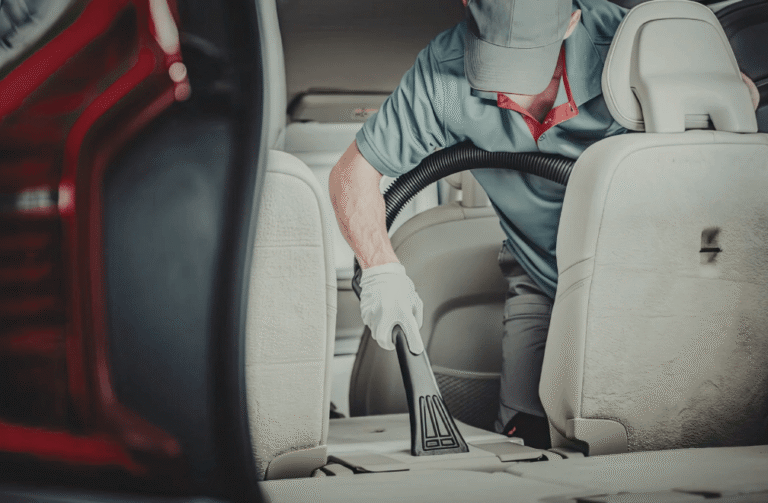
After the air gun has done its job loosening everything up, the vacuum’s narrow attachment can reach into those same gaps and pull out what the air dislodged. This one-two combination cleans areas that neither tool could handle alone.
This technique is only possible when you have access to both tools, and that’s not something you’ll find at most car washes or gas station vacuums. It’s one of the genuine advantages of washing at a facility like GO Car Wash, where a professional-grade air gun and high-powered vacuums are included free with every wash.
A Quick Guide to Car Vacuuming
Beyond the air gun technique, the other thing that separates a pro vacuum job from a casual one is working in a deliberate order. Here’s the sequence that works best:
Remove everything first. Floor mats out, trash out, anything sitting on the seats or floor out. Otherwise, you will have to vacuum again to get the debris that your stuff was hiding.
Shake and beat the floor mats outside the car. Before you vacuum them, give each mat a firm shake or a few solid smacks against the ground. This knocks out the loose, heavy grit to cut down your cleaning time.
Vacuum the seats before the floors. Any debris you dislodge from the seats will fall to the floor, so always work top-down. Get into the seat seams with the crevice tool, and don’t ignore the gaps between the backrest and the seat base.
Do the floors last, using the air gun first. This is where the dislodge-then-vacuum method matters most. Car carpet is far denser than household carpet and holds particles at a depth that suction alone won’t reach.
Vacuum the floor mats separately. Lay them flat on the ground outside the car and vacuum both sides. The underside holds more grit than most people realize, and that grit transfers right back to your clean floor the moment you put the mat back in.
The Car Detailing Spots Most Drivers Miss
Even experienced car owners tend to skip a few areas. Make these part of your routine:
- Seat track rails: The metal rails your seats slide on collect an impressive amount of debris. Hit them with the air gun, then follow with the crevice tool.
- Door pockets and sill channels: These are catch-alls for sand, crumbs, and small debris. The air gun clears them in seconds.
- Under the seats: Especially in the back corners where the seat meets the carpet. Kids’ seats, in particular, generate a debris field back there.
- The trunk: Often completely forgotten. If you regularly carry groceries, gear, or anything that sheds, the trunk carpet deserves the same attention as the rest of the car.
- Headliner vents: A few quick bursts of air from the gun prevents dust from building up in the climate vents and blowing back into the cabin.
How Often Should You Vacuum Your Car?
For most drivers, a thorough vacuum every two to four weeks keeps the interior in good shape. But a few situations call for more frequency:
- Kids or pets in the car regularly: Weekly vacuuming is not overkill. The rate of debris accumulation is genuinely different for vehicles carting children or pets.
- Beach trips or outdoor activities: Sand is the enemy of car carpets. Vacuum within a day or two of any beach or trail visit, while the sand is still loose and easier to remove.
- After a heavy pollen dusting: Fine pollen works into carpet and upholstery quickly. A thorough vacuum once the season peaks is worthwhile.
- Social season: Around spring break, during the summer season, or near the end-of-year holidays, you are more likely to be picking up family members or giving friends a ride home, sometimes without much warning time. It is better to prepare with a clean car than end up feeling embarrassed by the mess (or, worse, the smell).
Make It Part of Your Car Wash Routine
The easiest way to stay on top of your car’s interior is to tie vacuuming to your regular wash. Five to ten minutes with the vacuum and air gun can make all the difference for your car’s interior.
At GO Car Wash, the vacuum stations and air guns are available to every customer at no extra charge. No coin slots, timers counting down, or pressure to rush.
You can find a GO Car Wash near you and see the difference the right tools make.