If you’ve turned on the news this year, you’ve probably heard the word “drought” more than usual. Cities across the country have rolled out water restrictions in 2026 as reservoirs and snowpack levels drop to historic lows. Lawns are going dormant, sprinklers are getting scheduled for specific days, and a lot of drivers are left wondering one very practical question: can I even wash my car right now?
Thankfully, in almost every city with water restrictions, professional car washes stay open. They’re often the only fully legal way to wash your car at all.
Why Most Water Restrictions Single Out Home Washing
It might seem strange that washing your car in your own driveway gets restricted while a business that washes hundreds of cars a day keeps running. But the logic actually makes a lot of sense once you look at the numbers.
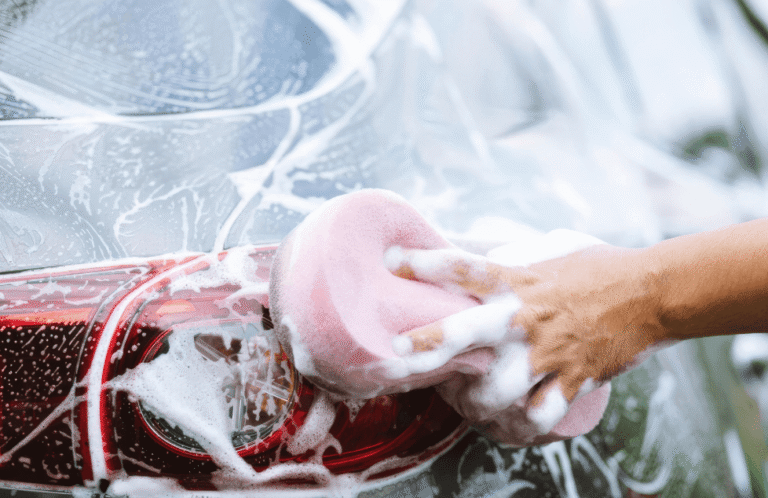
A typical driveway wash with an open garden hose can use well over 100 gallons of water, and in some cases as much as 140+ gallons. Most of that water doesn’t even end up doing the job. It runs off your driveway, picks up soap, oil, and grime along the way, and flows straight into a storm drain that empties into a local creek, river, or lake without any treatment.
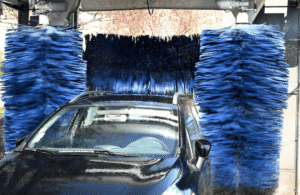
A professional car wash, by comparison, typically uses somewhere between 15 and 45 gallons per vehicle, and a meaningful share of that is reclaimed and reused water rather than fresh water pulled straight from the supply. That’s a fraction of what a home wash uses, and the wastewater goes through proper filtration before it’s discharged, not straight into a storm drain.
That gap in efficiency is why cities write their rules the way they do. Read more about how drive-thru car washes save water here.
What This Means If You Live Somewhere Under Restrictions
If your city has rolled out water restrictions this summer, here’s what that typically means in practice:
- Washing at home is often banned outright, or limited to specific days, hours, or a hose with a required shutoff nozzle.
- Commercial car washes are usually an explicit exception, meaning you can still get your car clean without violating local rules.
- Fines for violations are real. Some cities are issuing penalties of several hundred dollars per violation for ignoring restrictions.
- Rules can change quickly as drought conditions shift, so check your city or county’s current water restriction page if you’re unsure.
- Letting dirt sit isn’t a great alternative either, since road salt, bird droppings, tree sap, and bug residue can damage paint and trim the longer they’re left untreated, especially in summer heat.
Why Professional Car Washes Use Less Water Than Washing at Home
Even if your area isn’t currently under any water restrictions, there’s a solid argument for making the switch anyway.
A professional drive-thru wash typically gets your car cleaner with less mess, because high-pressure, low-flow equipment and professional-grade soap reach areas a garden hose and sponge usually miss. You also skip the part where you’re standing in your driveway for thirty minutes with a bucket, and you avoid sending detergent and grime straight into a storm drain that has zero filtration between your car and the nearest waterway.
There’s also a simple math argument. If you wash your car at home twice a month and switch to a professional wash that uses around 70 fewer gallons each time, that adds up to well over 1,500 gallons saved per year, per car. Multiply that across a household with two or three vehicles, and the impact starts to look a lot like the same kind of water savings a city is asking for when it limits lawn irrigation.
What to Do If You’re Not Sure Whether Restrictions Apply to You
A few quick steps if you’re trying to figure out where your area stands:
- Check your city or county water utility’s website for current restriction stages.
- Look specifically for language about “vehicle washing” or “car washing,” since that’s usually separate from lawn irrigation rules.
- Note whether commercial car washes are an exception, which they almost always are.
- When in doubt, default to a professional wash. It’s compliant nearly everywhere, drought or not.
Avoid Water Restrictions with GO Drive-Thru Car Washes
Water restrictions are becoming a normal part of summer in a lot of the country, and that trend doesn’t look like it’s reversing anytime soon. The upside is that you don’t have to choose between keeping your car clean and following the rules. Professional car washes were built around water efficiency long before drought made it a daily headline, which is why cities keep writing them into the list of exceptions instead of the list of restrictions.
At GO Car Wash, water efficiency isn’t an afterthought. Our locations use water reclamation technology to capture, filter, and reuse water throughout the wash process, so you get a genuinely clean car without the environmental footprint of a driveway hose-down. Find a GO Car Wash location near you, or check out an unlimited wash membership so a clean car never has to compete with your local water restrictions again.